
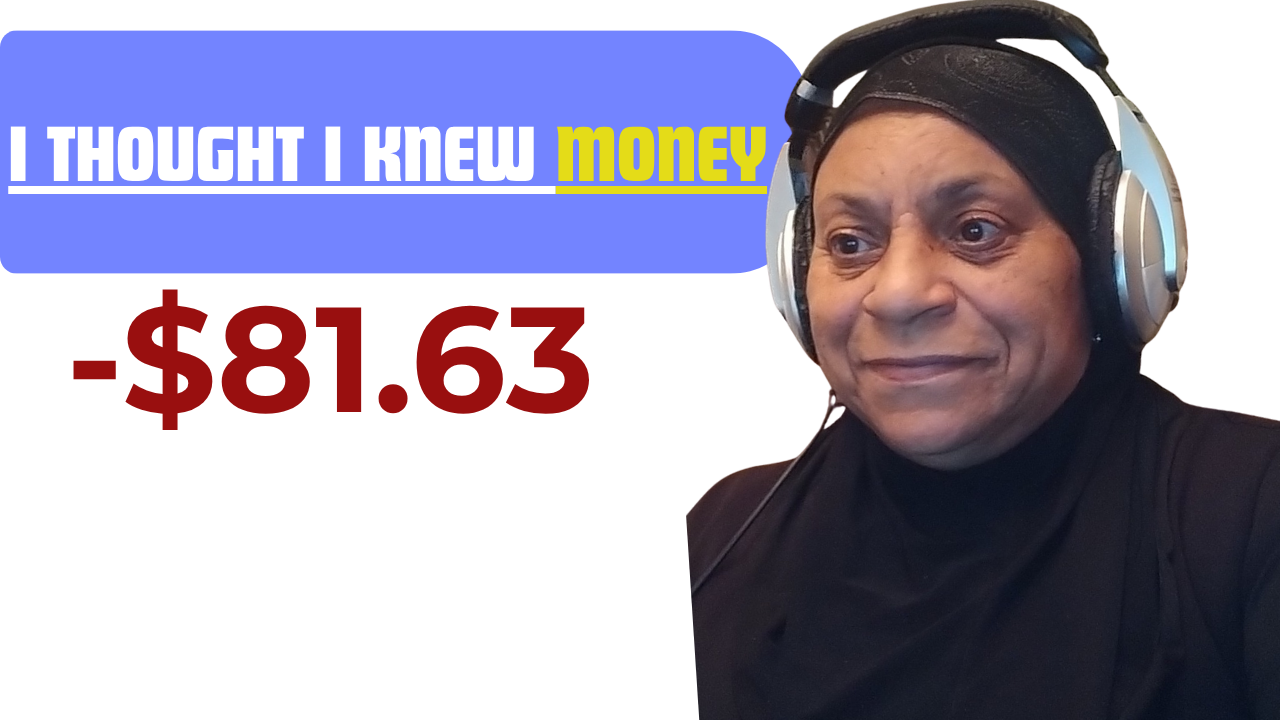
The first of the month is usually my checks-and-balance day.
I log into my accounts, review what came in, look at what went out, and make sure everything looks the way I expect it to.
I’ve been doing some version of this for years. Long before apps and automatic alerts, I was using a check register and balancing things by hand.

So there I was, going through my normal routine, when I logged into my account and saw something I definitely was not expecting:
-$81.63.
Wait a minute.
What happened?
I started looking through the transactions and found a charge I did not recognize.
At that point, this was no longer just a budgeting issue. I had to consider the possibility that someone had gained access to my money.
The first thing I did was take action to protect the account. I locked the card and contacted the financial institution so the transaction could be investigated.
That experience reminded me of something important:
Knowing about money does not mean that nothing will ever go wrong with your money.
You can understand budgeting.
You can track your bills.
You can monitor your accounts.
You can have years of financial experience.
And something can still catch you off guard.
The difference is what you do after you notice something is wrong.
Checking my account gave me the opportunity to catch the problem. Acting quickly helped me begin the process of protecting the account and getting answers.
That is why I still believe regular financial check-ins matter.
You do not have to obsess over your account every hour. But you should know what normally goes in, what normally comes out, and what does not belong there.
If you see something you do not recognize, do not simply assume it will correct itself. Review the transaction, secure your card or account if necessary, contact your financial institution, and follow its process for reporting suspicious or unauthorized activity.
And keep records of what happens along the way.
For me, this was another reminder that financial literacy is not about being perfect.
It’s about paying attention.
It’s about recognizing when something does not look right.
And it’s about knowing enough to take the next step.
I know money.
And yes, I still got caught off guard.
That’s Real-Life Money Talk.
Watch the Real-Life Money Story
Want to see how this story unfolded? Watch “I Know Money… So How Did My Account Go Negative?!” on YouTube.
-ENTowner
Your Financial Advocate

Leave a Reply